About MRS Addiction Treatment
Our Story
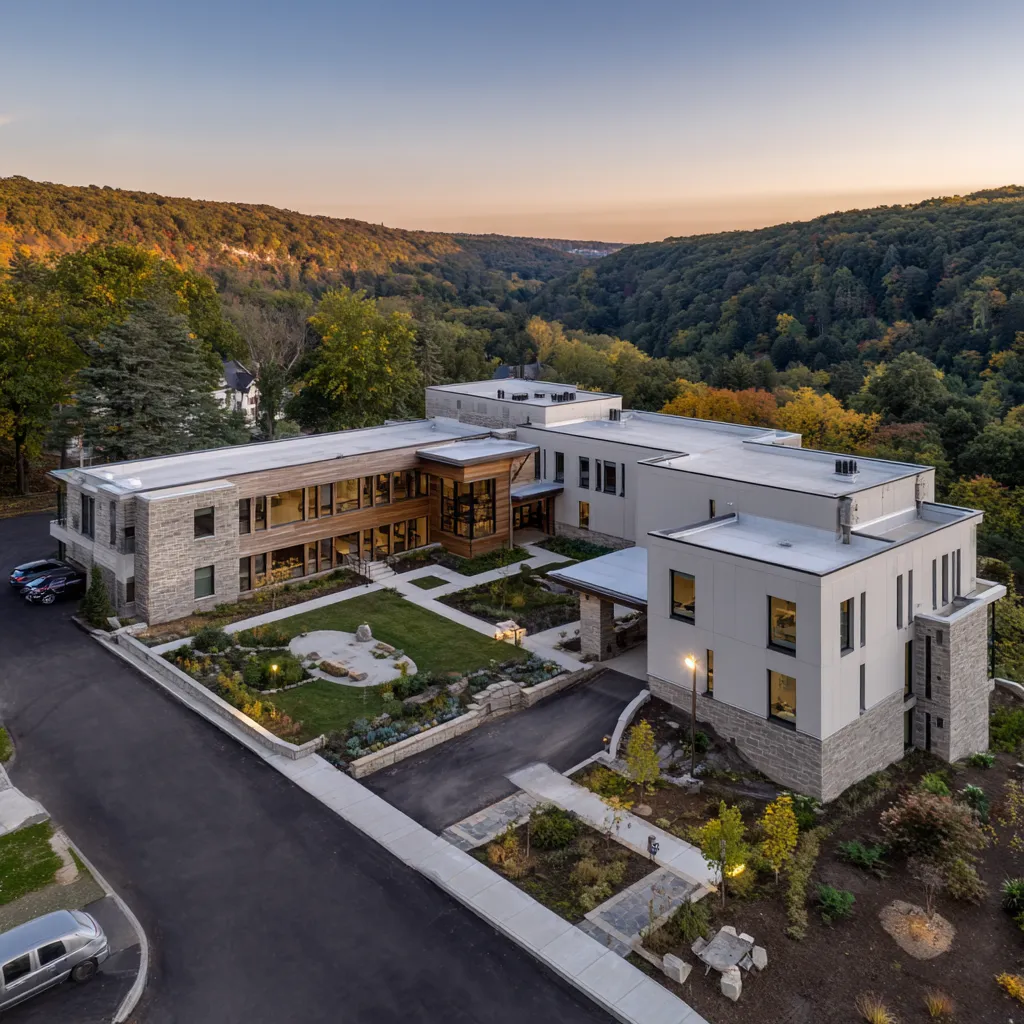
In 2017, MRS Addiction Treatment opened its doors on a quiet block near Monrovia's Old Town district. The center was founded by the Reyes-Santos family after losing their eldest son, Marco, to an accidental opioid overdose at the age of 31. Marco had struggled for years with prescription painkillers following a workplace injury, and the family watched helplessly as he cycled through emergency rooms and short-term programs that never addressed the full picture of his suffering.
After Marco's death, his mother, Rosa, and his sister, Sofia, channeled their grief into action. They partnered with Dr. Elena Park, an addiction medicine specialist practicing in the San Gabriel Valley, and together they converted a former assisted-living property into a licensed treatment facility. Their guiding belief was simple: no family should have to bury someone they love because the right treatment wasn't available or accessible.
Nine years later, MRS Addiction Treatment has grown from 12 beds to 71, with a staff of more than 130 clinicians, nurses, therapists, and support workers. Over 6,400 patients have completed programs here. The founding family remains involved in daily operations, and Marco's memory is woven into every aspect of the center's culture -- from the family visiting area that bears his name to the second-chance philosophy that shapes every treatment plan.

Our Mission
MRS Addiction Treatment exists to provide every person who walks through our doors with a genuine second chance. We believe that addiction is not a moral failing but a treatable medical condition, and that recovery is possible at any stage of life. Our mission is to deliver individualized, evidence-based care in an environment that feels more like a sanctuary than a hospital -- a place where patients and their families can find stillness, clarity, and the support they need to move forward together.
We are committed to meeting people where they are. Whether someone arrives in acute crisis or has been quietly managing dependence for decades, our clinical team designs a pathway that respects their circumstances, their dignity, and their goals. Every second chance we offer is rooted in science, sustained by compassion, and measured by lasting outcomes.
Treatment Philosophy
Our treatment philosophy rests on three interconnected pillars that distinguish MRS from conventional rehab programs:
Motivational Enhancement
Rather than relying on confrontation or shame-based methods, our therapists use motivational enhancement techniques to help patients discover their own reasons for change. This collaborative approach builds internal motivation that outlasts the treatment stay and reduces resistance in early recovery.
Nutritional Psychiatry
Emerging research confirms that gut health and nutrient balance directly influence mood, cravings, and cognitive function. Our registered dietitians work alongside psychiatrists to design meal plans that support neurochemical repair. The farm-to-table kitchen on campus prepares meals with whole, locally sourced ingredients chosen for their therapeutic value.
Harm-Reduction Continuum
We recognize that recovery is not a single event but a spectrum. Our harm-reduction continuum meets patients at every point on that spectrum, whether the goal is complete abstinence, reduced use, or stabilization through medication-assisted treatment. Every step forward is a step worth celebrating, and we design care plans that honor progress in all its forms.

Our Team
Dr. Elena Park, MD, FASAM
Medical Director
Board-certified in addiction medicine and internal medicine, Dr. Park has practiced in the San Gabriel Valley for over 15 years. She oversees all medical protocols at MRS, from detox management to psychiatric evaluations, and is a published researcher in nutritional psychiatry applications for substance use disorders.
Sofia Reyes-Santos, LCSW
Clinical Director & Co-Founder
Sofia earned her clinical social work license after her brother's passing and has dedicated her career to trauma-informed addiction care. She leads the family therapy program and trains staff in motivational enhancement techniques.
James Whitfield, PsyD
Director of Behavioral Health
With a doctorate in clinical psychology and specialized training in DBT and ACT, Dr. Whitfield designs the therapeutic curriculum for residential and outpatient programs. He has worked in addiction treatment for 12 years, with particular expertise in dual diagnosis care.
Carla Nguyen, RDN
Director of Nutrition Services
Carla leads the nutritional psychiatry program at MRS, translating the latest research on gut-brain health into daily meal plans and nutrition education groups. She partners with local Monrovia farms to source ingredients for the center's kitchen.
Testimonials
"As a mother, watching your child destroy themselves is the most helpless feeling in the world. The staff at MRS kept me involved from day one. They explained what was happening clinically, they held family sessions where I could finally say the things I'd been holding in for years, and they gave my daughter the tools to stay sober. She's been clean for two years now, and I credit this place with saving our family."
-- Linda K., Parent
"I started using MDMA and then cocaine my sophomore year of college. By 22, I was failing classes and lying to everyone. A friend told me about MRS and drove me to the campus near Old Town Monrovia. Something about the quiet there made me feel like I could actually stop. The early-morning walks, the outdoor therapy sessions, the way the mountains looked at sunrise -- it all reminded me that life had more to offer than what I'd been choosing. I'm 25 now, sober, and finishing my degree."
-- Aiden M., Young Adult
"I'm a financial analyst and I was drinking a bottle of wine every night to cope with pressure. Nobody at work knew. The team at MRS designed an IOP schedule that let me keep my meetings and deadlines while getting real clinical help three evenings a week. They understood that my career wasn't something I could pause. The motivational enhancement sessions helped me see that I wasn't choosing between success and sobriety -- I could have both."
-- Rachel S., Working Professional